My Fiction
Magnus
Modern and contemporary fiction, 192 pages, published by Salt
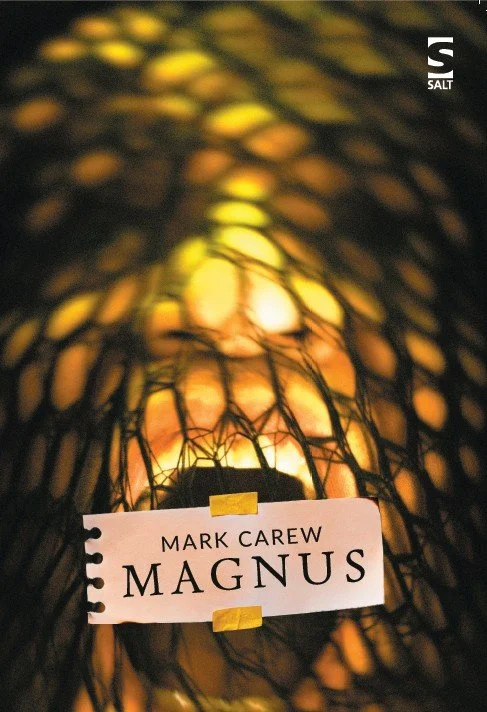
In Magnus we enter the world of heroes and villains, gods and monsters, good and evil. With a twist, of course, as one would expect from the author of The Book of Alexander.
Per, Jonas, Mette and Linnéa are university undergraduates on their final year project with Professor Erik Nordveit. Magnus is the unwelcome guest, a student of grotesque appearance with a shady past who must complete the project to be awarded a pass degree. The group will live together in a cabin on the remote island of Svindel off the west coast of Norway for one week. The pressure cooker atmosphere soon increases - who will explode first? Who can really concentrate on monitoring environmental pollution under these conditions when there is no contact with the mainland?
What starts as the capstone of their university careers slowly becomes more difficult for the Professor and the students. Events take a turn for the worse. True natures are revealed. Is there a need in all of us to escape, to maximise our freedom, to be ourselves? Do we naturally split into two sides and become either heroes or monsters? Can people truly govern themselves without laws and force of arms?
The week culminates in a bonfire party to celebrate Midsummer’s Eve. The neighbouring islands light beacons to celebrate the longest day with the sun still in the sky. In its hour of need who will answer Svindel’s call? Are heroes made or born?
Reviews of this book
Magnus, by Mark Carew, is mostly set on a remote island in northern Norway. Five students are spending a week studying the mosses that grow there for a project that will enable them to complete their studies. The professor overseeing their work owns the island and is nearing retirement. It is he who agreed to accept the outsider, Magnus, despite the man’s infamy putting others off attending. The group is small for what is usually a popular placement.
Magnus is older than the other students as he has struggled to graduate. His many health and behavioural issues have led to the university extending the time he is allowed to continue at the institution. This week, however, is his final chance to attain a degree. Magnus’s contempt for other people verges on the dangerous but the professor considers himself capable of managing whatever situations develop.
The island has no phone or internet connection. Power comes from a generator. Food and drinking water must be brought in. The residents are all but cut off from the world for the week they stay.
Parallel to the story of the island group is a tale of a young, English tourist, Alexander Clearly, who is travelling through Norway is search of adventure. He buys a wolf skin that he wears as a cloak and carries few other possessions. There are hints as to his relevance to the main plot and this is eventually revealed.
The arrogance of these two characters puts their lives in danger as they are determined to survive alone, on their wits, by whatever means. Along the way they encounter kindnesses that are rarely appreciated as most would expect. They are loners who only seem to regard their mothers with any sort of fondness. They wish to mate with women but lack social skills.
The dormitory accommodation on the island leads to issues when Magnus goes out of his way to be unpleasant. The group rejects him and he plots his revenge.
The writing is raw in places, which suits the animalistic behaviour of the protagonists. There is much dialogue but once the pace picks up the tale becomes compelling. I was reminded of Scandinavian Noir in translation despite this being an English work. The sense of place is strong throughout. The rituals described are evocative with the undercurrent of unease building well.
The denouement is tightly woven if disturbing. Magnus is really quite a terrifying creation when considered clearly. The reader, like the professor, will be challenged by the desire to give even dysfunctional people a chance, and the dangers this can lead to. A thought-provoking story that is well worth reading..’ —Jackie Law, neverimitate
I'd not come across this author previously, but when I found it while trawling Salt Publishing's website, it sounded really intriguing, so I bought a copy and I was hooked from the off. A small group of final-year university students - including title character Magnus, are gathered on a remote island just off the west coast of Norway to undertake a botancial survey, under the supervision of their professor Erik.
There is a creeping menace and tension which weaves its way throughout the book, as the two main characters - Alexander, the first-person narrator who is making his way across Norway (towards Magnus?) grow closer in geographical distance. With each chapter, the sense of unease and something climactic builds, and I was speculating all the way through, are these two characters connected - and how? Do they meet? And who are they really? Carew cleverly reveals tiny suggestions around these two people, without giving anything away, so the reader cannot help but track their journey. The description of place, too, was evocative without being overly descriptive and the stark, frozen landscape, with its nods to old, Nordic folklore, only adds to the growing aura of discomfort, isolation and uncertainty.
If you're someone who likes their thrillers to be wrapped up neatly and the what, who and why fully explained, this novel may be somewhat frustrating - but its ambiguity leaves you wondering - and wanting more. I will now look to read Carew's other novels The Book of Alexander and Beyond the North Wind! —Rachel, Goodreads
The Book of Alexander
Modern and contemporary fiction, 240 pages, published by Salt
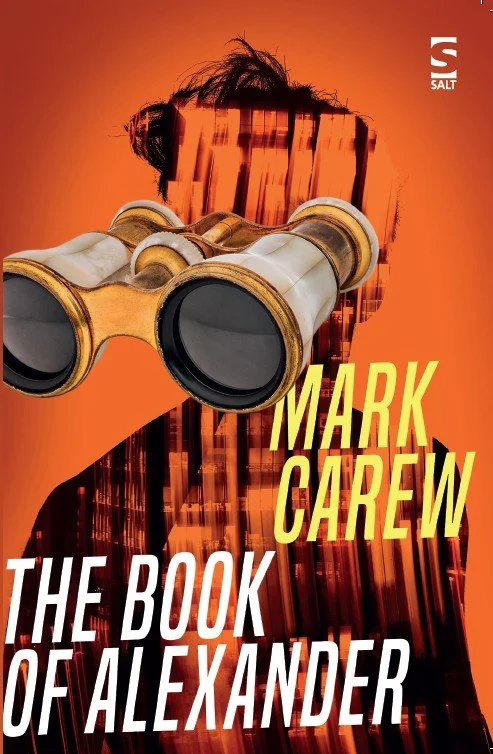
A post-modern puzzle about self and identity.
Alexander embarks on a remarkable experiment, the likes of which no one has attempted before, maybe that's why there is a detective watching him. With Penny, Alexander is a gadfly, mucking her about, unable to see past her beauty; but with Melanie, he has met his match. It is remarkable how quickly the mood shifts from talk of big questions (religion, God, beauty, how mirrors lie) to the perfectly ordinary nuances between a couple.
Praise for this Book
‘Raymond Chandler meets Maurice Sendac. A private investigator develops his latest assignment into a more complex exploration of the exterior and interior worlds of his ‘watch’. It’s vastly more invasive, but no one gets hurt. Mark Carew’s book is mysterious yet understated, and the reader cannot but stick with him as the intrigue develops. Exquisite.’ —Alison Baverstock, author of Is there a book in you?
Reviews of this Book
‘The Book of Alexander was an interesting novel, very much a thought experiment in fictional form. We’re always wondering about the detective as much as his quarry and this makes for a rather mysterious read, another very enjoyable debut from Salt.’ —Shiny New Books
‘[A] disturbing, self-reflective chiller. The shifting perspectives demonstrate how filtered any observation of people will be. Alexander seeks subjects for his art. The reader may find themselves captured by his gaze.’ —Jackie Law, neverimitate
‘Mark Carew’s debut novel is written with a wit and compassion that is second to none. Alexander is about to embark on a remarkable never before attempted experiment – he will find who he is by writing a book as if he were a detective. The more you read of Alexander’s story, the more you fall in love with him and with Carew’s humor, which is deeply embedded into his writing.’ —Daniel George, Big Issue in the North
‘The detective begins the job, he spies on Alex and Penny too, they seem to be rowing. The detective makes notes in what will become The Book of Alexander. Penny is soon gone, Ruth replaces her within hours, there are other women interested in Alexander and vice versa. The book contains Alexander’s reading preferences, the contents of his computer, his sexual partners and connections to the outside world and a wider view of his philosophical understanding of the world. Does it bring him to any greater understanding of self for Alexander? You decide.
This is a first novel of promise, a second, Magnus, will be published in 2019.’ —Paul Burke, NB Magazine
Beyond The North Wind
Modern and contemporary fiction, 203 pages, self published
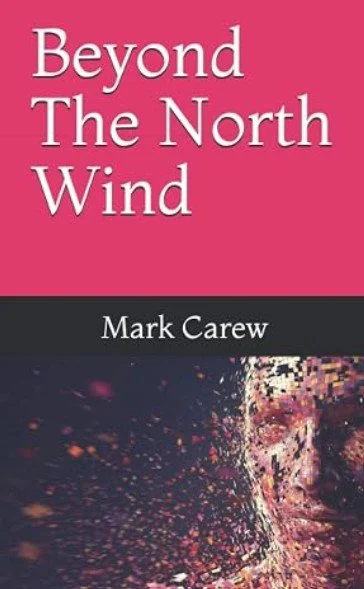
A woman searches for clues to why her husband went missing and never returned. For three years, Anna has been in limbo, not knowing what happened to Emil, her husband. Every day she hopes Emil will return but he never does. One day, her dog dies, and Anna is left alone. So she goes in search for the truth about Emil's disappearance. Her trek takes her across the mountains and glaciers of her native Norway, looking for people who might have met Emil. Did he reach the coast and photograph the sunset? Do the humanists assembling at a villa in Uektefjord now anything about him?
Beyond The North Wind is narrated chapter by chapter by the author on The Joy of Writing podcast.
Reviews of this Book
I've been reviewing books for going on five years now. I remember my first 'official' one, that being Jane Austen's Pride and Prejudice. Short version: I hated it. But from there, and pretty consistently, my reading was divided into two categories: the reading of the 'classics' with their mountains of hype, scholarship, interpretations, and legions of acolytes and apostates loving and hating them respectively. Then there were the new releases from authors, somehow, writing and even existing today. But the books from the latter category, like the former, all came from major publishing houses.
Now, I'm no stranger to the small presses or independent publishing houses. I make it a ritual to try and get to the Los Angeles Times Book fair every year. While there I check out the major publishers but also the smaller ones too, you never know what you might find, you know? I do have to admit that, save for Bukowksi, I can't really say for certain that I've read any other writers from the smaller presses (at least from this century, in this country, in this language).
That rambling preamble out of the way, let me get to the book at hand. In short: I was and am surprised, in all the best ways. Mark Carew's Beyond the North Wind has all the depth and grace of a novel published by any of the major houses. Carew brings in his story with the protagonist Anna, a heroine that is real enough to be a relation, is so human that I wouldn't be surprised to meet her on the street, as the mother or aunt of a friend of mine.
The story is perfectly paced and though the beginning is a bit meandering and slow it more than makes up for it with the journey up the mountain (and the absolutely gorgeous descriptions of the snow, the storms, and the glaciers) that rivals anything I've found in international literature I've read up to this date. I feel as though I've walked in Norway myself after finishing this book, and have met these characters and felt their subtle joys and trembling sorrows. And the journey's second half, where Anna, continuing her sojourn to find out what happened to her lost husband Emil, finds her way to an artists/philosophers colony, is similarly well told. It takes its time and allows the new characters to be as human and realistically depicted as Anna.
As a small negative, there were some editorial problems. Piddling issues, nothing that mars the text at all, in fact one more editorial sweep would've taken care of it. And the relationship between Anna and Alexander towards the end, felt a bit cliche, at least the build up, certainly not the conclusion, a bit too reminiscent of Nicholas Sparks for my liking.
The conclusion is satisfying. Haunting and sweet, with just enough of a mystery left to leave me curious, leave me wondering and a bit sad that I had to leave this imagined Norway so soon.
Read it, it's very good, even great at times. —Yair, review of first edition, Amazon